Together Everyone Achieves More


Shelam Pada Drought, 2018
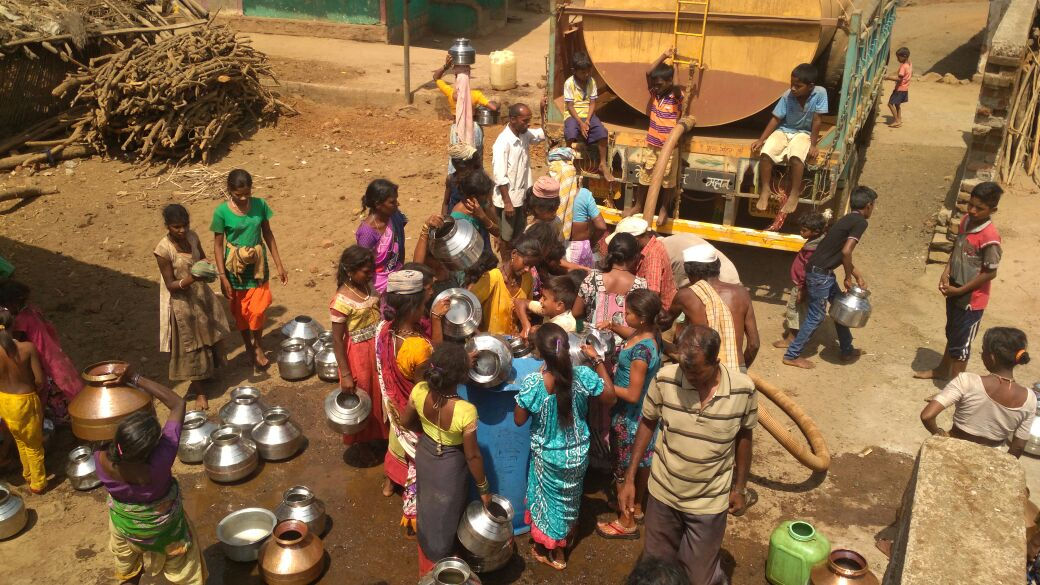
In the summer of 2018, T.E.A.M. learned about a suffering village through an NGO called Anjezee, called Shelam Pada in rural Maharashtra, 30 kilometers away from Nashik. The small village of 540 families had no access to water, since their only well was infested with algae. Moreover, this well was located 2 kilometers downhill from the village, which meant that women collecting water for their families had to walk for 15 minutes to get to the well, and then carry the heavy pots of water uphill for another 2 kilometers. The village did not even have access to simple necessities that we take for granted every day, such as running water and electricity, and the children were prone to diarrhea, nausea, and dehydration.
Using experiential learnings from the project at Devachi Urli, T.E.A.M. decided that the appropriate immediate response was to provide clean drinking water, and a truckload of fresh water cartons for the village was immediately organized to end the short term suffering. Within a week, T.E.A.M. assembled at Shelam Pada along with a group of water experts to dig a bore well in the center of the village, with the objective of providing locals with easier access to a water source that would sustain them in the long run. The experts concluded that they could build a 350 foot deep well, since the terrain suggested that there would be abundant water at that depth. However, this water had to be pumped up to the hill, which was particularly challenging because the small village didn’t even have access to the National Electricity Grid!
T.E.A.M. studied the feasibility of solar panels and found that the harsh sun would make this a particularly good option. Fundraising efforts from members ensured that donations came pouring in, and the solar panels were procured, delivered, and installed in just 5 weeks. Solar panels in India typically cost 16 lakh rupees, but the solar agency gave us a 3 lakh rupee discount after understanding our cause, while an extremely generous villager donated a part of his farmland to allow us to erect the solar panels on it.
Simultaneously, T.E.A.M. also created a pipeline from the top of the hill to the bore well, along with taps at regular 10-foot intervals, so that people could collect water near their homes. An overhead water tank with a 150,000-gallon capacity was also repaired, allowing the villagers to store water so that they were not cut off from their drinking supply during cloudy or rainy weather (when the solar panels wouldn’t be operational). The tank had inbuilt filtration, and also included a rainwater collection system so that the availability of this scarce resource could be maximized. When 16 T.E.A.M. members and 5 volunteers visited Shelam Pada a few months later, everyone was delighted with the results.




Summary Video
